Research & Product Strategy · Carwow
Understanding how people buy cars
When I joined Carwow, the business had a clear mission: make buying a new car simpler and more transparent.
Like many product organisations, we knew a lot about our own customers but much less about how people actually made decisions before they ever reached us.
Understanding that journey became the foundation for our product strategy.
Looking beyond the transaction
Buying a car is one of the biggest financial decisions most people make, yet much of the industry focused on helping people compare specifications and prices.
We wanted to understand something deeper.
Rather than beginning with features, we began with behaviour.
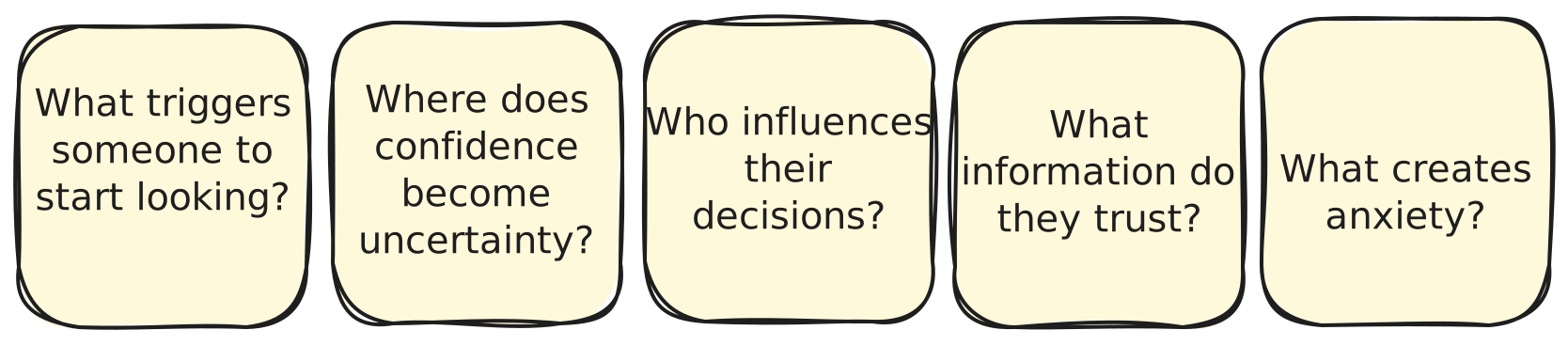
Building a shared understanding
I commissioned Carwow’s first dedicated behavioural research programme.
Working alongside a specialist research agency, we interviewed buyers with different motivations and life circumstances, alongside dealers and industry experts to understand both sides of the marketplace.
The work combined qualitative interviews, journey mapping and behavioural analysis to build a richer understanding of how people move from first considering a car through to ownership.
This wasn’t research for its own sake. It was intended to give Product, Design and Commercial teams a common understanding of the problems worth solving.
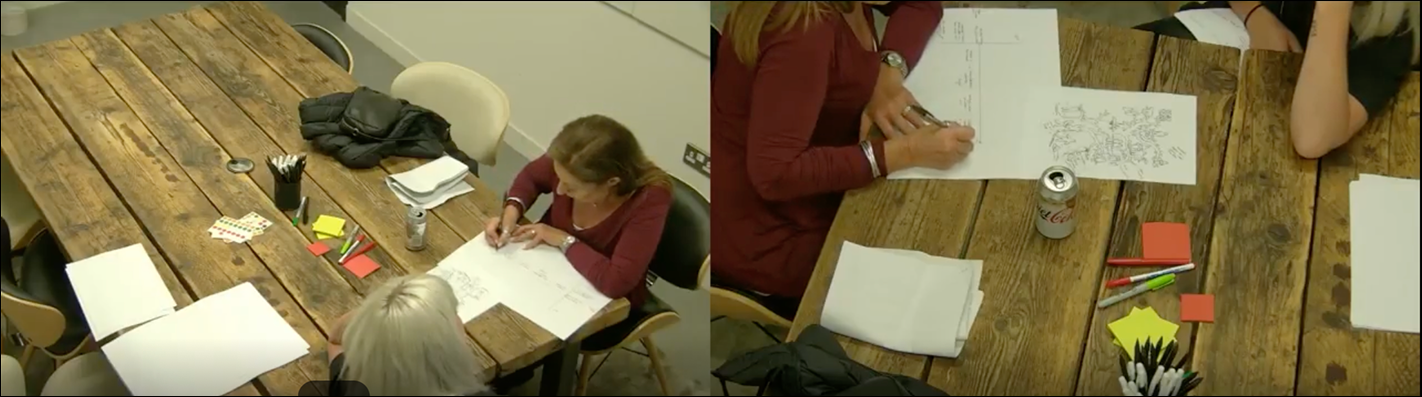
As part of the research we conducted several moderated interviews with recent car buyers
From customers to behaviours
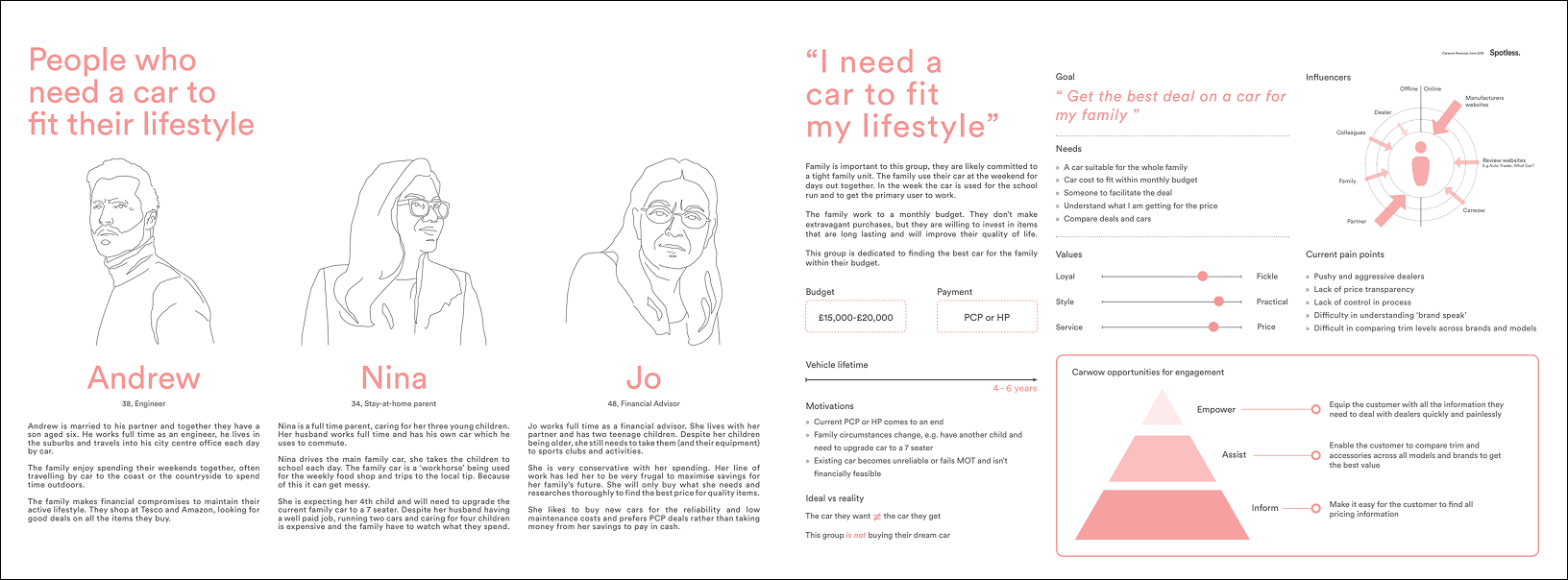
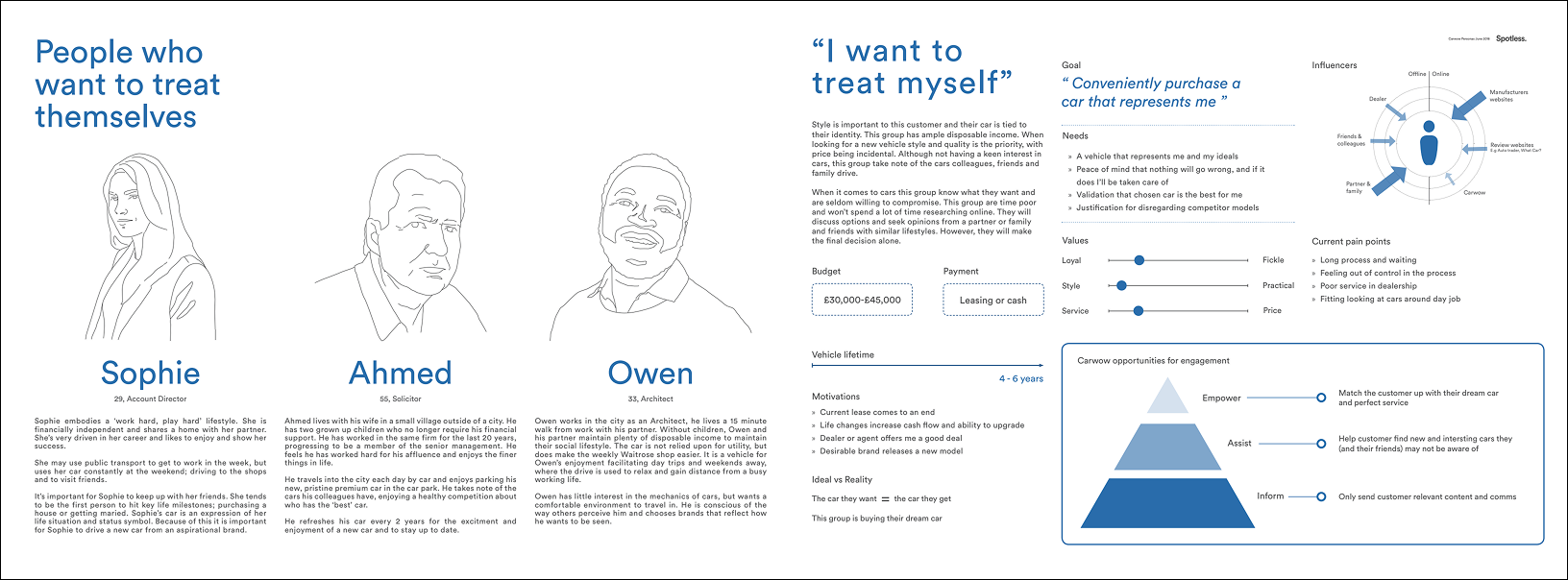
One of the biggest outcomes was recognising that people weren’t defined by age or income as much as the reason they were buying.
Different motivations created completely different decision-making behaviours.
For example:
People who need a car to fit their lifestyle
Focused on practicality, family needs and confidence that they were making the right decision.
People who want to treat themselves
More emotionally driven, seeking reassurance that their purchase reflected their aspirations while still representing good value.
Understanding those motivations allowed us to move beyond generic experiences towards products that responded to different customer needs.
Turning research into strategy
The research identified opportunities well beyond improving existing journeys.
We used the findings to prioritise a roadmap of new propositions and customer experiences, mapping opportunities against different stages of the buying journey rather than isolated product features.
It became a shared reference point across Product, Design and Commercial teams, helping us make decisions based on customer behaviour rather than assumption.
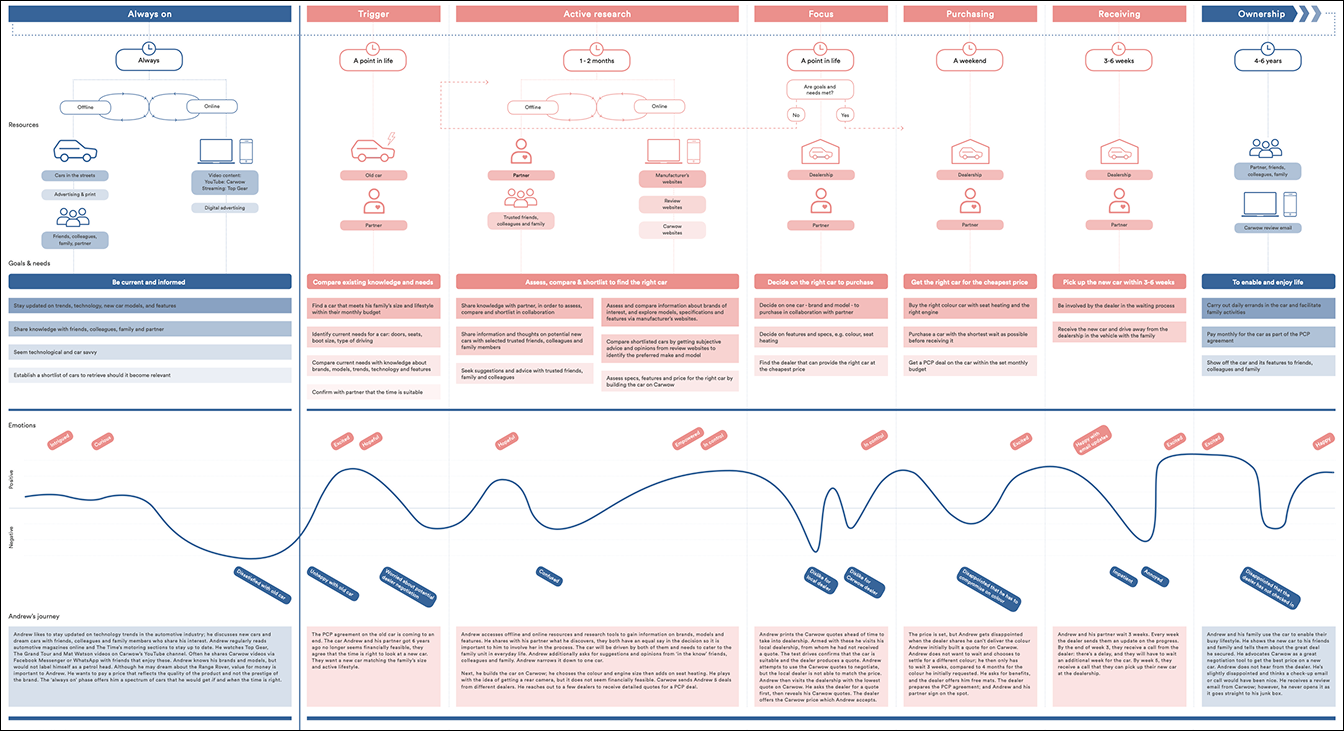
Affinity map plotting a customer journey
Always on
One insight kept appearing throughout the research. People often discovered cars away from their computers.
They wanted information immediately, but the existing experience assumed they would return home and begin a traditional search.
That led to a simple question.
How might we help people learn about a car the moment they become interested in it?
I facilitated a series of cross-functional workshops to explore possible responses.
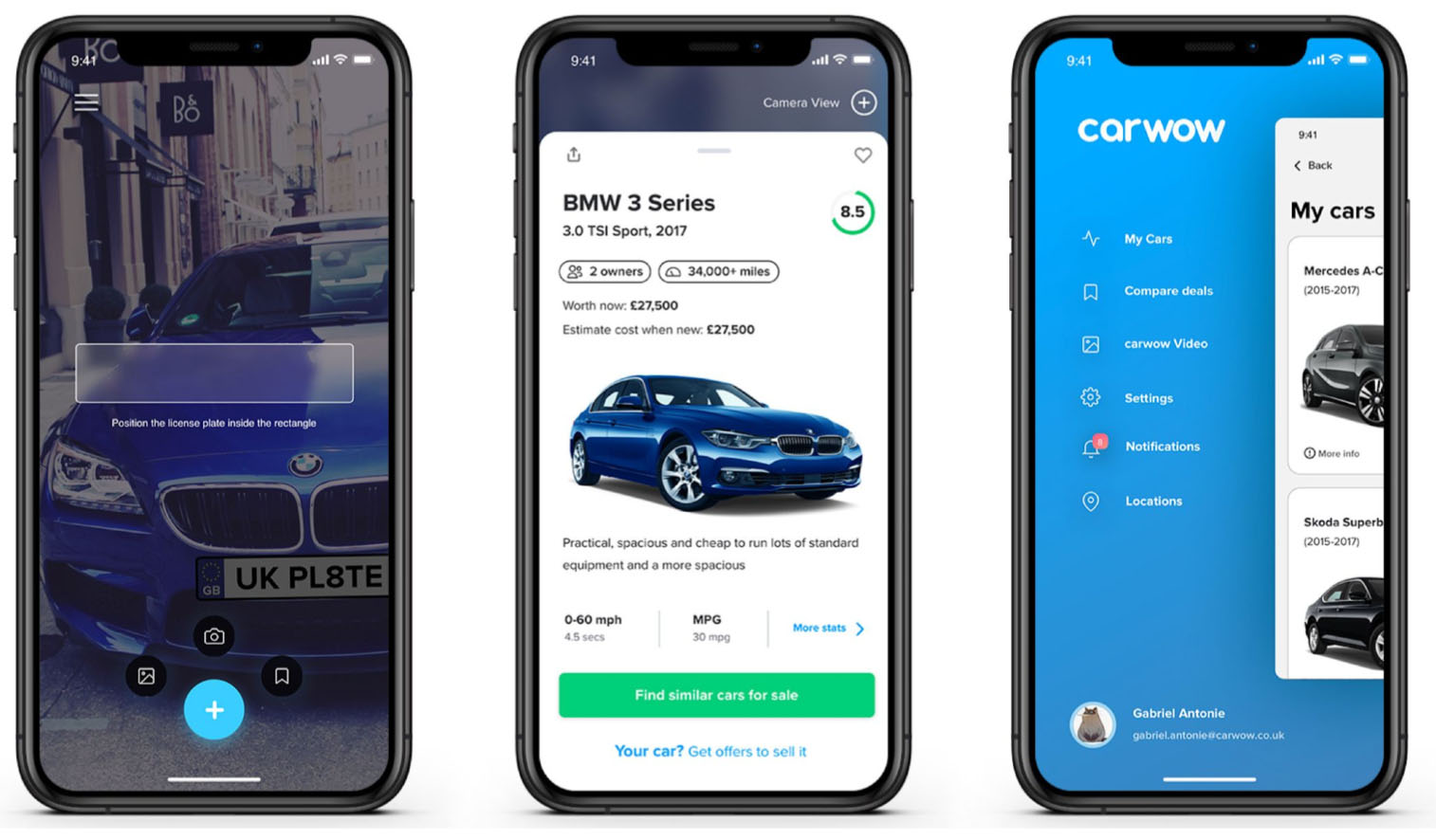
The idea that generated the most excitement was using a phone’s camera to scan a vehicle registration plate and instantly surface reviews, specifications, pricing and available deals.
As we explored the concept further, additional use cases emerged:
- Compare dealership pricing while standing beside the vehicle.
- Estimate the value of your own car.
- Save interesting cars for later research.
- Build an always-on relationship beyond the buying journey.
The proposition represented a different interaction model, bringing Carwow into real-world moments rather than waiting for customers to begin an online search.
Proving the concept
Working with Engineering and external commercial partners, we validated both the technical feasibility and customer demand.
The prototype demonstrated that registration plate recognition could reliably connect physical vehicles with Carwow’s catalogue, creating an experience that felt immediate and genuinely useful.
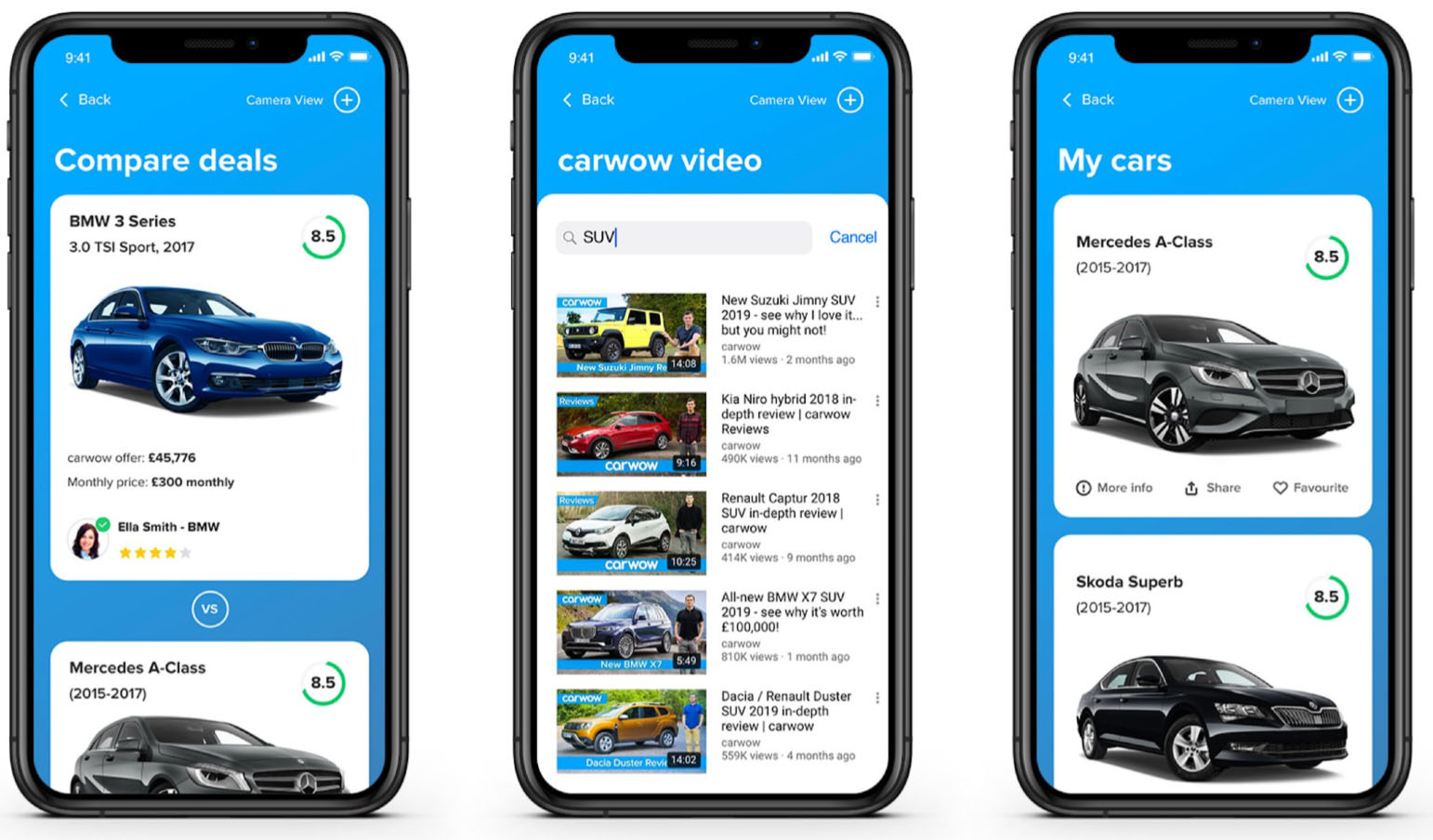
The concept secured support to continue development into Carwow’s first mobile application.
Outcomes
The research programme became the foundation for product planning over the following year.
It established behavioural segmentation used across the business, created a shared understanding of customer journeys and generated multiple product opportunities beyond the original brief.
The mobile application launched shortly after my departure and continues to maintain strong customer ratings.
More importantly, the project reinforced a lesson that has shaped my approach ever since.
Products improve when teams stop asking what customers are doing and start understanding why they’re doing it.
Reflection
Looking back, this project established an approach I’ve continued throughout my career.
At Carwow, it meant understanding the motivations behind buying a car before designing products.
At Motorway, it meant recognising that people weren’t simply selling a vehicle; they were trying to move on with their lives.
Later, while leading international product teams, it meant accepting that customer behaviour changes across markets, even when the product appears identical.
Better strategy begins with a deeper understanding of people, not better assumptions about products.